Welcome to Binary Vigil Docs
BinaryVigil is a powerful tool designed to protect your applications from abuse by providing robust rate limiting capabilities. It acts as a gateway, sitting in front of your application and intelligently managing incoming requests.
Benefits of using Binary Vigil:
- Rate Limiting: Protect your servers from being overwhelmed by excessive requests, ensuring availability and stability. Also reduces resource usage on your backend.
- Cost-Effective: Rate limited requests are handled at no charge.
- Cheap: Very cheap to run.
- Easy Integration: Simple to set up and easy to use.
How to Use Binary Vigil
Get started with Binary Vigil in a few easy steps:
-
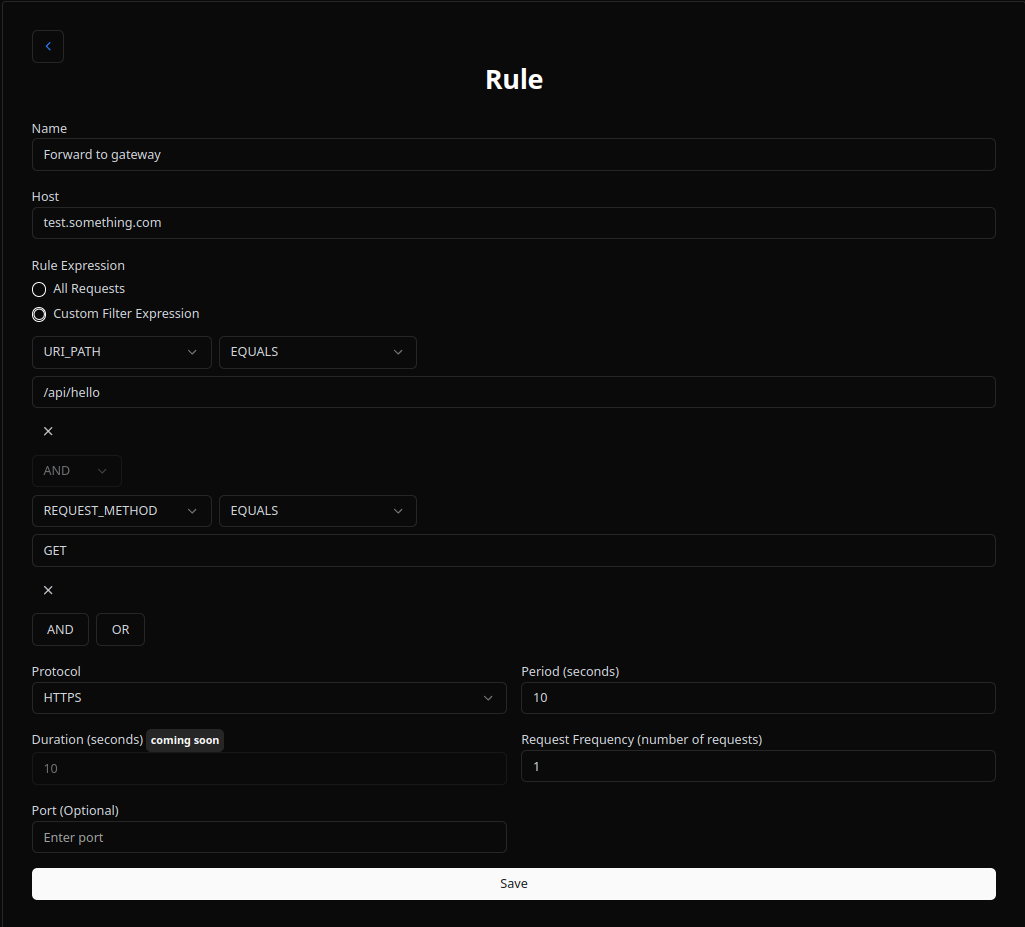
Create a Host: From binaryvigil.xyz create a new host.
-
Copy Host ID: After creating the host, go back and click on the three dots to reveal a menu, then select "Copy Host ID".

-
Use Host ID in Header: When making requests to your application through the binaryvigil gateway, include the
X-Host-Idheader with the copied Host ID. This header is essential for routing your traffic through Binary Vigil and applying the configured rate limiting rules.Send your requests to
gateway.binaryvigil.xyz, including theX-Host-Idheader. The path and query parameters can be anything you need for your application.Example Requests:
Using curl:
curl -H "X-Host-Id: YOUR_HOST_ID" https://gateway.binaryvigil.xyz/your/application/path?param1=value1¶m2=value2Using fetch in JavaScript:
fetch('https://gateway.binaryvigil.xyz/your/application/path?param1=value1¶m2=value2', { headers: { 'X-Host-Id': 'YOUR_HOST_ID' } }) .then(response => { // Handle the response });This header tells binaryvigil which host configuration to apply to the incoming request, ensuring the correct rate limiting rules are enforced.
Rate Limited Response:
When a request is rate limited, binaryvigil gateway will return a 200 status code with the following JSON body: